Redesigning a nonprofit's website to better communicate its impact
Summary
Justice Innovation Lab (JIL) is a nonprofit that uses data to build solutions for a more equitable criminal justice system. We redesigned its website and brand system to improve usability, strengthen storytelling, and enable a small, non-design team to consistently maintain and evolve the experience.
The challenge
JIL’s website was a critical channel for sharing research, insights, and impact. But it wasn’t effectively serving its audience. The site was difficult to navigate, the brand system lacked consistency, and accessibility issues limited how clearly JIL could present its data and findings to prosecutors, policymakers, and community partners.
The visual problems went deeper than aesthetics. Existing color palettes didn’t meet Web Content Accessibility Guidelines (WCAG) standards. Some design patterns risked unintentionally signaling political bias — a serious concern for an organization whose credibility depends on being seen as a neutral, data-driven partner. Without a cohesive design system, every new page or report looked and felt different, undermining the trust JIL needed to build with its stakeholders.
Adding urgency, JIL needed to launch a new “knowledge hub” — a centralized destination for reports, blog posts, and multimedia — within a tight six-week timeline. With no in-house design team, any solution had to be easy for non-designers to use and maintain long after the engagement ended.
The solution
The engagement ran six weeks, structured as three two-week sprints. We audited and redesigned JIL’s entire web presence using an agile, user-centered approach. JIL’s team had regular opportunities to review progress and shape the direction of the work.
Visitors couldn’t find research because the labels matched JIL’s org chart, not the resources they were looking for. Reorganizing the hierarchy made it possible for visitors to reach JIL’s most important research and insights in fewer clicks.
A new knowledge hub gave JIL a centralized destination for reports, blog posts, and multimedia. Search, tagging, and filtering let audiences explore the full body of work rather than hunting across scattered pages.
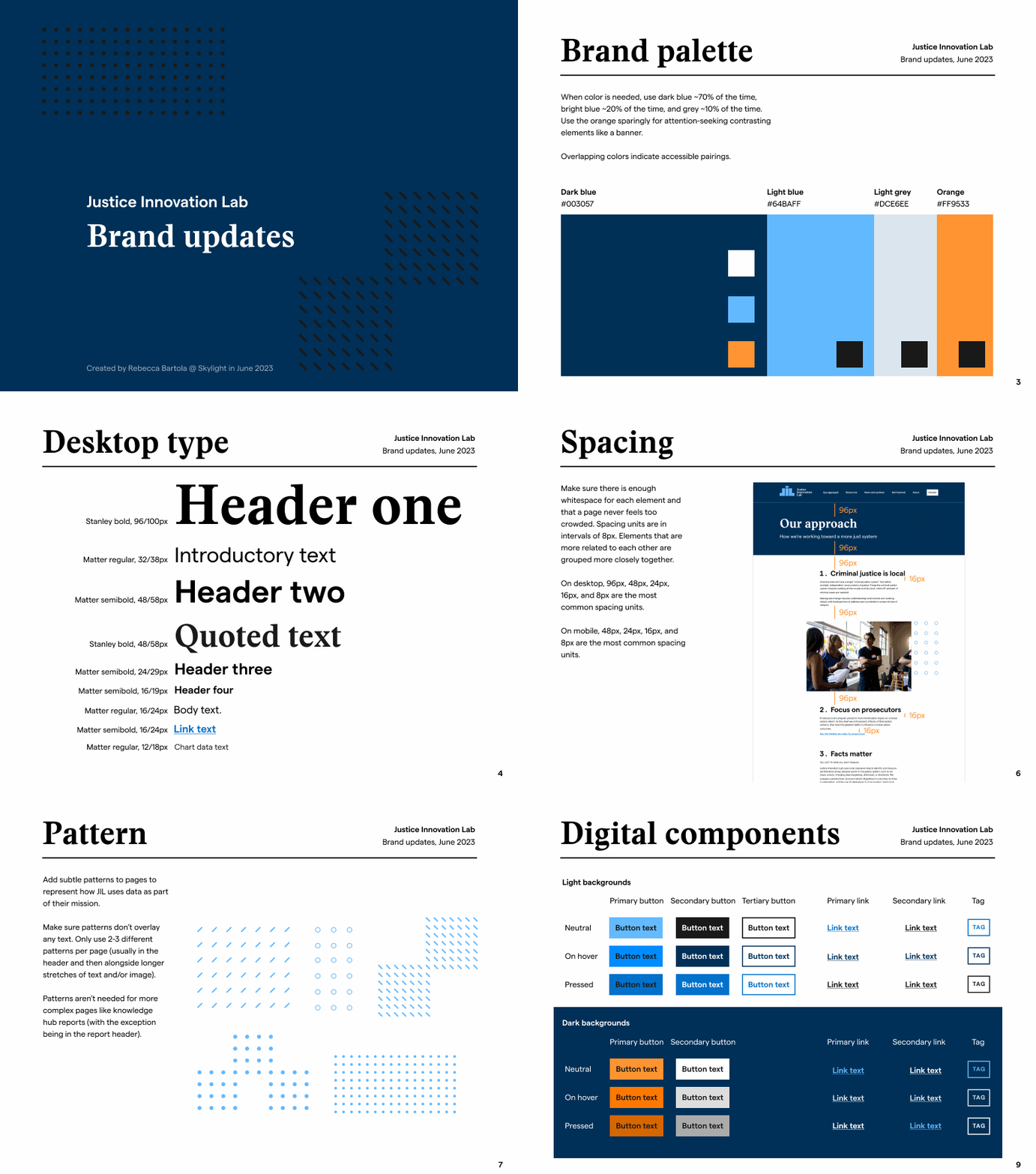
Addressing the accessibility and bias risks required a full visual identity refresh. New color palettes, typography, and design patterns improved readability and contrast while eliminating elements that could signal unintended political alignment. The updated brand system gave JIL a more cohesive, professional presence across all touchpoints.
Long-term sustainability shaped every design decision. We created modular, reusable templates and clear brand guidelines so non-designers on JIL’s team could confidently create new pages, reports, and content without compromising the system’s integrity. The system needed to work without a designer in the room.
Data visualization guidance rounded out the engagement. Clear standards for charts, graphs, and data presentation ensured JIL’s research findings would be both visually compelling and accessible to all audiences.
The results
- Delivered a complete website redesign that improved navigation, visual consistency, and user engagement across the entire site
- Launched a centralized knowledge hub that organized JIL’s research, reports, and multimedia content with search, tagging, and filtering capabilities
- Established a WCAG-compliant brand system with accessible color palettes, typography, and design patterns that eliminated unintended bias signaling
- Created reusable templates and brand guidelines that enabled non-design staff to independently create and maintain content
- Delivered the full redesign in six weeks, with JIL launching the new experience across its website and brand touchpoints shortly after the engagement concluded